 Ravia
Ravia
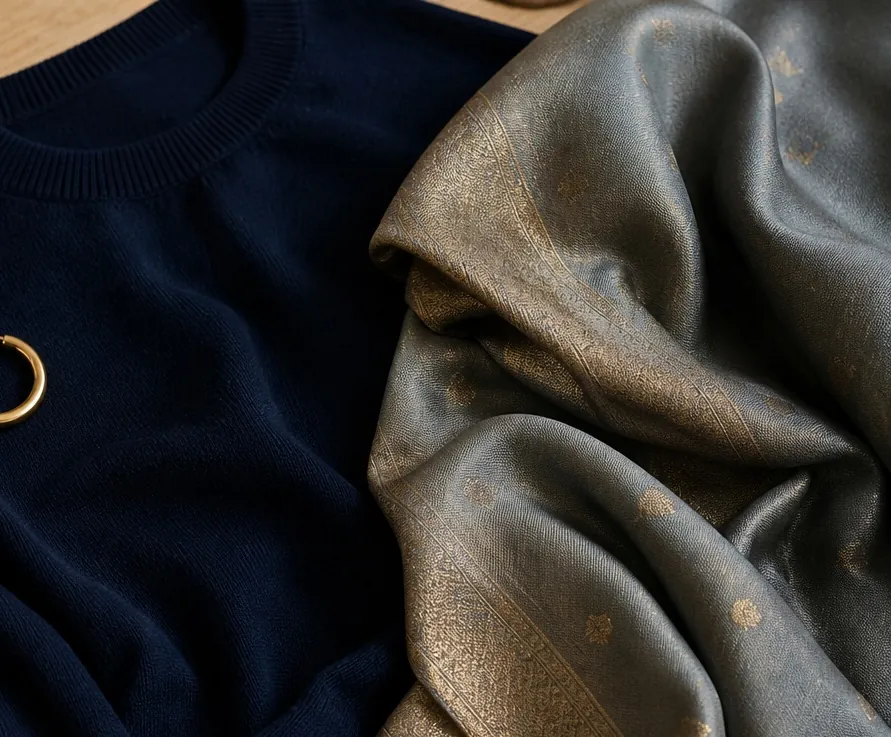
Make a Borrowed Saree Blouse or Lehenga Fit
The baraat is in two days, your sister has handed over a gorgeous embroidered lehenga, and the blouse closes everywhere except the one place it needs to. Borrowing desi clothes is one of life’s best arrangements: more outfit options, less closet guilt, and access to ammi’s or your cousin’s serious occasionwear collection. The only rule is returning it exactly as you received it. Whether a borrowed saree blouse or lehenga is a little snug, loose, long, or short, a few temporary fixes can make it wearable without putting a needle through someone else’s garment.
How to Make a Borrowed Saree Blouse Bigger
A blouse that is only slightly too tight often needs relief at the closure, not a dramatic alteration. Start by trying it on with the exact bra or shapewear you plan to wear. A different bra band, thicker padding, or a high-compression piece can change the fit enough to create a problem that was not there before.
- Use a blouse extender at the back. A temporary hook-and-eye extender adds room between the existing back closures. Choose one with hook spacing that matches the blouse, and test it at home before the event. This works especially well under a dupatta, where the back is naturally less visible.
- Turn a tie-back blouse into an adjustable one. If the blouse already has dori ties, loosen them gradually and redistribute the fit across the shoulders and bust. Ask someone to tie the cords securely, then tuck the loose ends inside the blouse or under the dupatta so they do not wander into photos.
- Use a matching blouse as a backup. If the borrowed blouse is far too small, wear the borrowed lehenga or saree with a blouse you already own in a coordinating solid. Gold, ivory, black, deep maroon, and a shade pulled from the embroidery can look intentional rather than improvised.
- Choose a dupatta placement that gives coverage. For a blouse that is technically wearable but does not feel comfortable, drape the dupatta over both shoulders or diagonally across the front. It adds coverage without hiding the outfit’s work.
Do not force the hooks closed or rely on safety pins to hold a blouse shut at the back. Pins can bend, open, snag delicate fabric, or pull embroidery when you sit down for dinner. If the blouse is straining across the bust, shoulders, or armholes, switch blouses rather than spending the evening negotiating with it.
How to Make a Borrowed Saree Blouse Smaller
A loose blouse is usually easier to manage temporarily, especially if the extra room is at the back or waist. The goal is to remove slack without creating visible lumps or damaging sequins, zardozi, or lining.
- Adjust the hooks if there is an inner row. Many ready-made blouses have multiple hook positions. Start with the tightest existing row before adding anything else.
- Use fashion tape for a gaping neckline. Apply body-safe double-sided fashion tape to clean, dry skin and the inside edge of the blouse neckline. Press firmly for several seconds. It is useful for preventing a deep V, sweetheart neckline, or shoulder edge from shifting during the event.
- Secure extra fabric at the side seam from the inside. If there is a small amount of room at the waist, use a tiny safety pin inside the side seam or underarm area to create a temporary tuck. Pin only through the lining when possible, not through visible silk, net, or embroidery. Use more than one small pin rather than one large, heavy pin.
- Add structure underneath. A supportive, well-fitted bra can take up surprising space in a loose blouse and improve the shape of the neckline. Try the complete look while moving your arms, sitting, and reaching overhead.
Skip adhesive tape directly on embellished fabric and avoid pinning across the outer surface. A single misplaced pinhole can be very noticeable on silk or satin, particularly under flash photography.
How to Make a Borrowed Lehenga Skirt Fit at the Waist
A lehenga skirt that is too large can slide down, twist while you walk, or bunch under the blouse. A skirt that is too small can be uncomfortable before the mehndi has even dried. First, identify the waistband style: drawstring, side zip, hook closure, elastic back, or a combination. The safest solution depends on what is already built into the skirt.
- For a lehenga that is too big, tighten and anchor the drawstring. Pull the drawstring evenly from both sides, tie a secure bow, and tuck the ends inward. If there is no drawstring, use a narrow waist belt or a slim petticoat with a firm waistband underneath to give the lehenga something to grip.
- Use a temporary inner tuck for minor extra room. From the inside, fold a small section of the waistband at each side and secure it with small safety pins through the inner waistband or lining. Keep the folds symmetrical so the skirt still hangs evenly.
- For a lehenga that is slightly tight, check for a drawstring channel. A drawstring can often be loosened more than expected. Loosen it a little at a time, then spread the gathers evenly around the waist so all the fullness does not sit at one hip.
- Wear the right base layer. A smooth petticoat or skirt liner reduces friction and helps a lehenga fall cleanly. Avoid bulky elastic waistbands beneath a fitted skirt; they can create a visible ridge and make a borderline-tight waistband feel worse.
If the zip will not close without pulling hard, do not ask someone to wrestle it up. Zippers fail at the least convenient time, and tugging can tear the seam beside it. Wear a different skirt, pair the borrowed blouse with a skirt from your own closet, or save the piece for an outfit swap that includes tailoring time.
How to Handle a Lehenga That Is Too Long or Too Short
Length is where borrowed lehengas become a staircase situation. Never cut, hem, use hem tape, or stitch a borrowed skirt unless the owner has explicitly asked you to. Even temporary iron-on products can leave residue, shine, or a crease on delicate fabric.
- Raise a too-long lehenga from underneath. Choose shoes first, then wear a slightly fuller petticoat or one with a higher waistband to lift the skirt. A thicker waistband can raise the hem a little without touching the lehenga itself.
- Use discreet temporary lifts. If the skirt has a plain inner lining, small temporary folds can be pinned upward inside the lining at evenly spaced points. Test the drape from all angles and make sure the outer layer is not pulled into odd scallops.
- Wear a too-short lehenga with intention. Choose a lower heel or embellished juttis, and let an ankle-length hem look deliberate. A longer dupatta draped vertically can add visual length to the overall silhouette.
- Practice walking before leaving. Walk on carpet and hard flooring, climb a few steps, sit down, and do one very realistic dance-floor turn. If the hem catches, adjust before you are balancing a clutch, chai, and a plate of appetizers.
How to Style a Borrowed Saree or Lehenga So the Fit Looks Intentional
The most convincing temporary fix is often smart styling. A dupatta is not merely decorative; it can soften a fit issue, add coverage, and make separates from different outfits look like they were always meant to be together.
- Use the dupatta strategically. Pin it at one shoulder and carry it across the front for blouse coverage, or place it over both shoulders to frame the neckline. Use pins on the blouse lining or a concealed inner layer, not through heavy embroidery.
- Add a belt only when it serves the outfit. A slim metal or fabric belt over a saree or lehenga can define the waist and help hold pleats or a slightly loose skirt in place. Keep it comfortable enough to sit through dinner.
- Balance proportions with jewelry. A high-neck blouse can carry statement earrings and a sleek bun; a simpler blouse can take a heavier necklace. This draws the eye to the complete look rather than one small fit adjustment.
- Take a full-length photo in natural light. Check the front, side, and back before the event. Look for visible pins, a shifted neckline, a twisted waistband, and any fabric pulling. Photos catch what the mirror misses.
Keep Track of Borrowed Outfits Before the Next Wedding
Borrowed clothes are easier to return—and easier to borrow again—when you remember whose emerald banarasi saree needs to make its way home after the walima. Add the borrowed outfit to your Ravia digital closet with a note for the owner and occasion. A quick photo can also help you remember the original dupatta drape, jewelry pairing, and any temporary fit tricks to remove before returning it. When the night is over, take out every pin, extender, and piece of fashion tape before folding the outfit away.
A borrowed saree blouse or lehenga does not need to fit like it was custom-made to look beautiful. Work with closures, lining, layers, and draping; test every fix while sitting and moving; and leave the garment exactly as lovely as you found it. Keep your desi wardrobe organized with Ravia.
Sources reviewed
The closets you already share.
Photograph what you own in the iPhone app. Get dressed from it. Share with family. Sell what you never wear.