 Ravia
Ravia
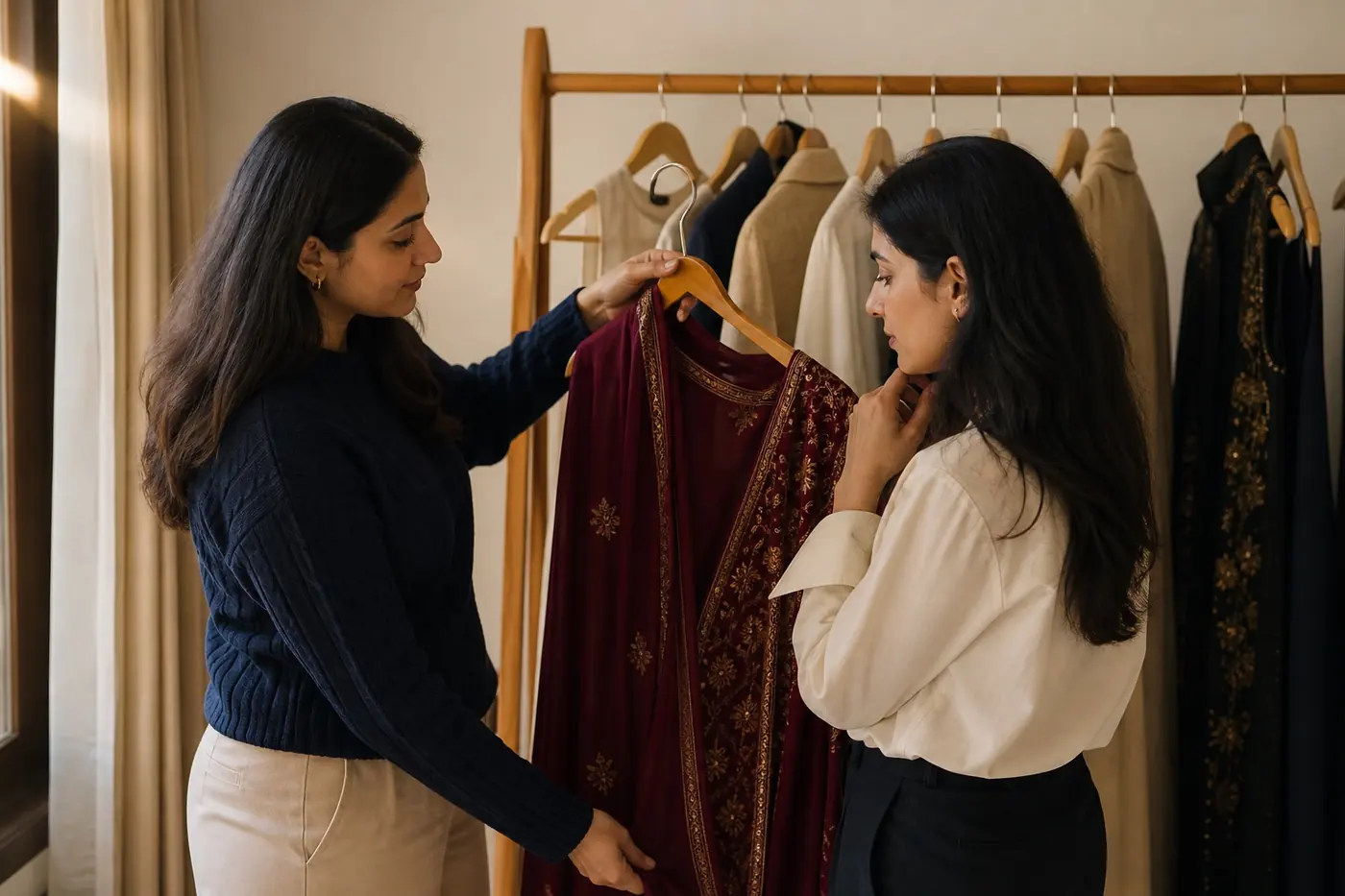
How to Share Desi Outfits With Family Respectfully
The mehndi is Saturday, your sister’s emerald gharara is exactly right, and suddenly one innocent “Can I borrow it?” has the potential to become a full family-group-chat situation. Sharing lehengas, sarees, ghararas, shararas, and embroidered suits can be one of the best parts of having stylish family around—but formal desi clothes are not a casual hoodie swap. They carry delicate work, sentimental value, tailoring history, and sometimes a price tag nobody wants to discuss over chai. A few clear habits can keep the outfit beautiful and the relationship even better.
How to Ask Family to Borrow a Lehenga or Saree
Ask early, ask specifically, and make it easy for the owner to say no. “Can I borrow your gold silk lehenga for my cousin’s sangeet next month? I’d wear it only for the event and return it cleaned by the following weekend” is much kinder than appearing in her room the night before with a hopeful face.
- Name the exact piece and occasion. Avoid vague requests such as “Can I borrow something?” A specific ask lets her consider whether that particular outfit is available, sentimental, or already promised to someone else.
- Give the event date and return date. This matters especially during wedding season, when one outfit may be needed for a dholki, nikkah, reception, or family photos in quick succession.
- Ask before making your whole look around it. Do not buy matching jewelry, tell friends what you are wearing, or announce it to relatives before the owner agrees.
- Accept no without negotiation. “No” may mean the blouse is fragile, the dupatta has sentimental value, or she simply does not feel like lending it. A warm “Of course, no worries” protects far more than pushing for an explanation.
- Offer useful reassurance. Say how you will transport it, whether you will wear a slip underneath, and that you will follow her cleaning instructions. Reassurance is better than “I’ll be careful,” which is lovely but not a plan.
If your family shares often, keep requests out of the frantic text-scroll. Ravia’s Circles can give a family group one place to share closet pieces, so everyone can see what is available and discuss a borrow before two people assume the same maroon anarkali is theirs for Eid.
Borrowing Etiquette for Expensive Indian and Pakistani Clothes
The borrower’s job is to return the outfit in at least the condition she received it—ideally hanging neatly, with every piece accounted for. That means treating the outfit as borrowed from a boutique display, not as something you can toss on a chair after a long walima.
- Do a five-minute check together before taking it home. Note the blouse, skirt or trousers, dupatta, belt, tassels, safety pins, detachable sleeves, and garment bag. Look for loose stones, existing pulls, makeup marks, or missing hooks so there is no confusion later.
- Try it on before the event. Walk, sit, lift your arms, and test the dupatta placement at home. Discovering that the blouse is too tight in a car on the way to the venue is how hooks surrender and everyone gets stressed.
- Pack it properly. Keep embellished clothing in a breathable garment bag or clean cotton cover. Fold heavy embroidery with acid-free tissue or soft clean fabric between layers when possible, rather than cramming it into an overstuffed weekend bag.
- Keep food and makeup risks in mind. Put your outfit on after foundation and setting spray have fully dried. Use a napkin over the front while eating nihari, biryani, or anything with enthusiastic chutney potential. Carry a clean safety pin and small stain cloth, but do not aggressively rub a stain.
- Never lend it onward. If your cousin sees it and falls in love, she needs to ask the owner herself. Borrowing an outfit does not include borrowing rights for the rest of the family.
Can You Alter a Borrowed Desi Outfit?
Not without explicit, item-by-item permission. This is the boundary that prevents the most hurt feelings. “It will be easy to put back” is not the same as the owner agreeing to a tailor touching her outfit. Even reversible changes can leave stitch marks, strain fabric, or alter the drape.
- Do not cut, shorten, dye, stitch, unpick, or permanently remove anything. That includes taking in a blouse, opening side seams, shortening a lehenga hem, removing a cancan, changing hooks, or cutting tassels off a dupatta.
- Ask separately about temporary adjustments. A safety pin, fashion tape, blouse extender, waist extender, or temporary sleeve cuff may be fine—but ask first. Some fabrics snag easily, and some owners do not want pins through net or silk.
- Use your own supporting pieces first. A neutral camisole, shapewear, underskirt, blouse extender, or your own earrings can make a borrowed piece work without changing it.
- Get permission in writing when a tailor is involved. A clear text confirming exactly what can be done avoids fuzzy memories later. Include who is taking it to the tailor, what the alteration is, and whether it must be reversed before return.
- If it does not fit, let it go. A beautiful outfit that requires major changes is not the right borrow for this event. Your peace is worth more than forcing a blouse closure at the last minute.
How to Clean and Store Borrowed Embroidered Outfits Safely
Cleaning is not one-size-fits-all. Zardozi, mirror work, sequins, velvet, silk, chiffon, organza, net, and hand embroidery all react differently to moisture, friction, heat, and dry cleaning. The owner gets the final word on care, even if you would clean your own outfit another way.
- Ask for care instructions before wearing it. Find out whether the owner prefers professional cleaning, spot treatment only, airing out, or a particular cleaner. Check the label if there is one, but follow the owner’s preference when the two differ.
- Do not wash an embellished outfit at home unless the owner specifically approves. Water, detergent, and rubbing can loosen stones, dull metallic thread, bleed dye, or distort delicate fabric.
- Address spills quickly but gently. Blot with a clean white cloth; do not scrub, use wipes, or apply random stain remover. Take a clear photo and tell the owner promptly if a mark remains.
- Air it out after the event. Hang the outfit away from direct sunlight and steam, in a clean dry space, before packing it. Never return a damp, perfumed, or food-scented outfit zipped tightly into a bag.
- Return it complete and on time. Rehang it carefully, place the dupatta and accessories as received, and return it by the agreed date. If cleaning will take longer than expected, tell the owner before the deadline—not after she asks.
What to Do If You Damage a Borrowed Outfit
Tell her quickly, plainly, and without a defensive speech. Small issues are much easier to handle when they are not discovered weeks later while she is getting dressed for another shaadi.
- Share the facts. Explain what happened, what you did immediately, and where the damage is. A photo can be useful for a stain, loose embellishment, torn net, or broken hook.
- Let the owner choose the repair path. She may have a trusted tailor, cleaner, or embroidery repair person. Do not send the item somewhere first and hope the repair will be invisible.
- Take responsibility for the reasonable next step. Offer to cover the cleaning or repair she chooses. Avoid turning the conversation into a debate about whether the damage was “that bad.”
- Do not hide wear-and-tear. A missing stone, a loose seam, or a tiny oil mark may feel minor, but honesty is what makes sharing possible next time.
Make Family Outfit Sharing Feel Generous, Not Expected
The healthiest closet-sharing culture has boundaries on both sides: owners do not have to lend, and borrowers do not have to feel guilty for asking respectfully. Thank the person who lends to you, return the piece thoughtfully, and remember that a cherished powder-blue saree can be both a garment and a memory. When the rules are clear, borrowing from ammi, a sister, or a cousin stays what it should be: a little extra sparkle for the occasion, not a relationship test.
Keep family closet sharing organized with Ravia Circles.
Sources reviewed
The closets you already share.
Photograph what you own in the iPhone app. Get dressed from it. Share with family. Sell what you never wear.